
ZasPas
Resumen

¡DESPLAZATE HACIA ABAJO PARA VER MÁS!
País
Tipo de organización
Número de empleados
Tipo de práctica
Nivel de inversión
Tipo de actividad
Palabras clave

Resumen


Antecedentes y origen
Relevancia para el sector artesanal
La empresa está vinculada al sector artesanal preservando la artesanía tradicional y creando productos de alta calidad mediante la artesanía experta. Al reciclar residuos automotrices, ZasPas resalta la importancia de crear productos con un ciclo de vida largo, ofreciendo a los artesanos locales la oportunidad de trabajar con materiales reutilizados.
Enfoque material: tipo de material de desecho involucrado
Grupos objetivo
- Consumidores conscientes del medio ambiente.
- Personas interesadas en la moda.
- Entusiastas del diseño que valoran la sostenibilidad y la artesanía única.
- Además, como los productos están estrechamente vinculados a la industria automotriz, los aficionados y entusiastas de los automóviles, así como los trabajadores y empleados de la industria automotriz, también constituyen un grupo objetivo importante.
Partes interesadas involucradas
Profesionales involucrados y sus roles
- Diseñadores: supervisan la transformación creativa de los desechos automotrices en productos portátiles o funcionales.
- Artesanos/Técnicos: realizan la producción, incluyendo el corte, la costura y el acabado.
Conexión de la práctica con las necesidades identificadas en el proyecto
Conocimiento de los materiales de desecho
ZasPas requiere un profundo conocimiento de las propiedades de los textiles y plásticos automotrices. Su proceso implica la investigación de técnicas seguras de manipulación, limpieza y procesamiento, garantizando así la alta calidad y durabilidad de los materiales reciclados.
Habilidades empresariales verdes
La empresa demuestra habilidades de emprendimiento ecológico al identificar un nicho de mercado para la moda reciclada, cumplir con las regulaciones ambientales y diseñar modelos de negocio escalables. Sus prácticas sirven como modelo para integrar la sostenibilidad en proyectos rentables.
Creatividad y soluciones innovadoras
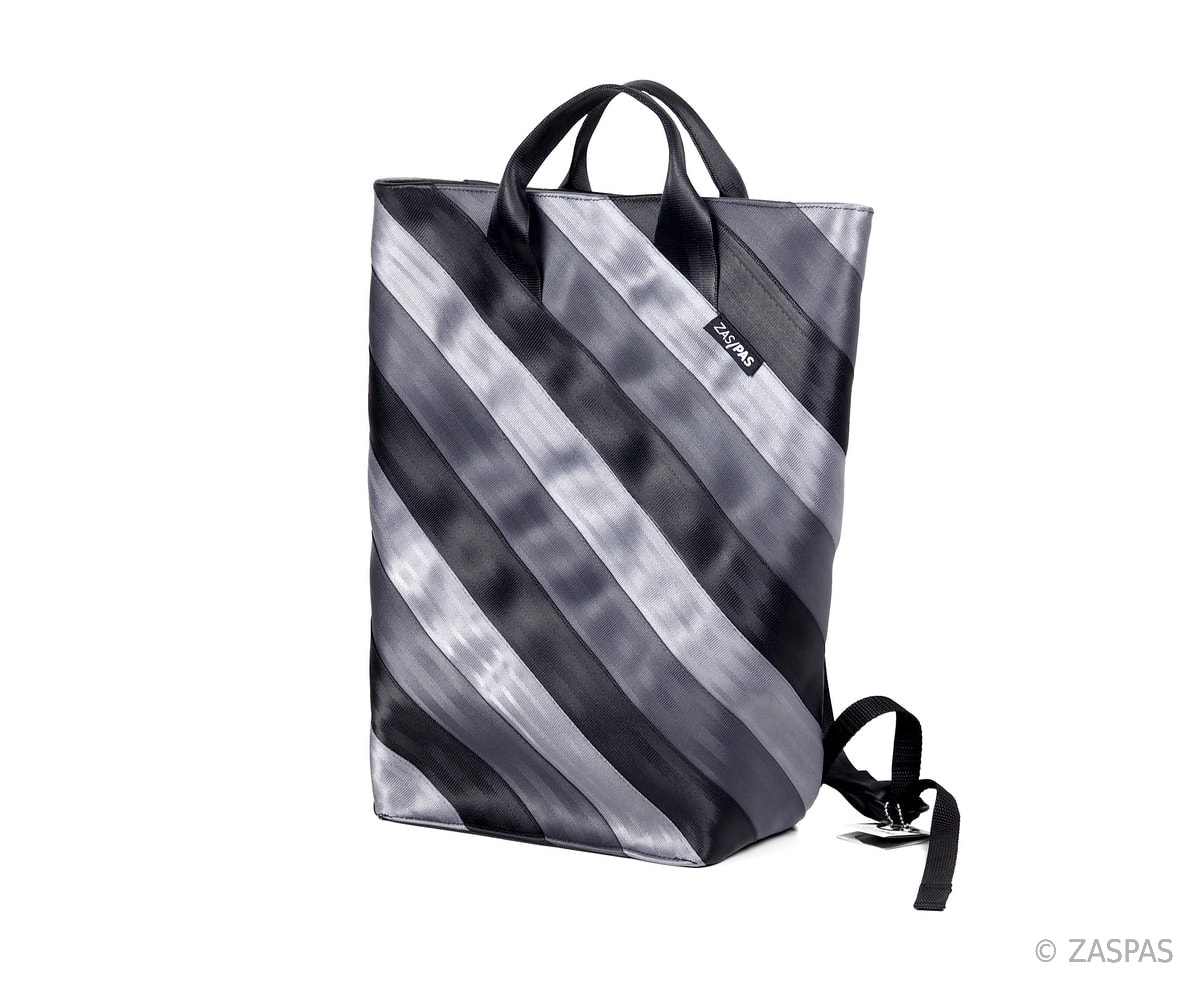
ZasPas es un ejemplo perfecto de creatividad en el supraciclaje, transformando residuos industriales en productos de moda. Su integración estética de texturas robustas, derivadas de la automoción, en diseños elegantes refleja un enfoque innovador hacia el diseño sostenible.
Enfoque metodológico para implementar la práctica
Descripción del proceso: instrucciones paso a paso para implementar la práctica
Recursos relacionados que se han desarrollado
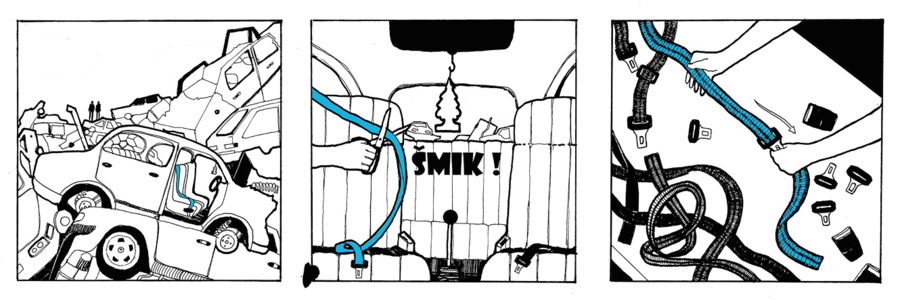
- Acceso a desguaces, patios de chatarra o centros de reciclaje de vehículos.
- Lavadora.
- Máquina de coser y agujas resistentes.
Producto final
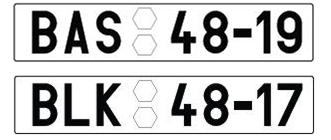
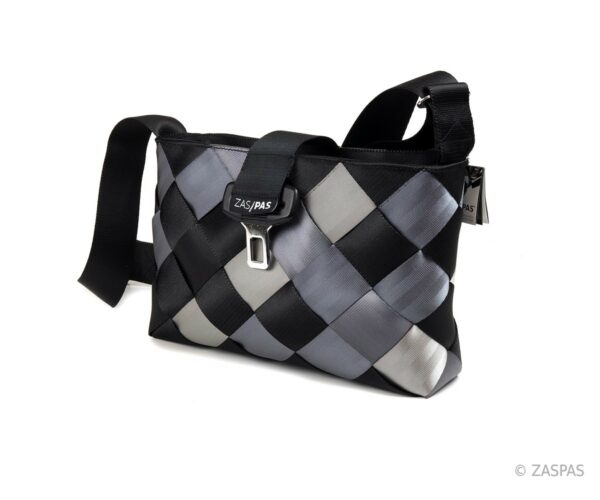
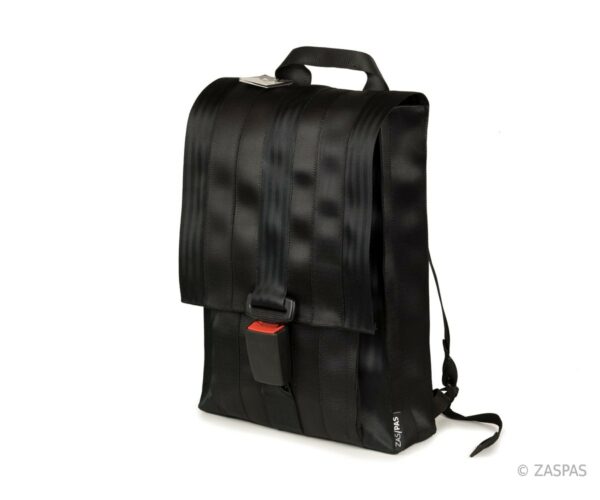
ZasPas ofrece mochilas, neceseres, bolsos, carteras, riñoneras, bolsos trenzados, bolsos con hebillas y riñoneras de colores, confeccionados principalmente con cinturones de seguridad de coches antiguos. Lo que hace única a su colección es el ingenioso sistema de nombres de cada producto: los modelos están etiquetados con códigos divertidos que recuerdan a las matrículas de los coches, es decir, el color (3 letras), la etiqueta del producto concreto de la línea (2 números) y el año de diseño (2 números). Por ejemplo: BLK-48-19 (mochila negra de 2019), BAS-84-18 (bolso negro-plateado de 2018), BAB-38-13 (bolso negro-marrón de 2013). Cada artículo es único y refleja la historia del material original.
Fuentes de financiación para esta intervención
- Premio financiero del concurso regional «Rozjezdy roku», apoyado por T-Mobile, para impulsar el negocio.
- Inversión propia e ingresos por la venta de productos.
Innovación, métodos o tecnologías novedosas utilizadas
ZasPas se ha forjado un nicho de mercado al transformar un material poco común, como los cinturones de seguridad usados, en accesorios elegantes, duraderos y ecológicos. En un momento en que la moda sostenible cobraba impulso, pero muchas marcas se centraban en los textiles, ZasPas recurrió a la industria automotriz en busca de inspiración. La marca identificó un nicho de mercado para productos robustos y originales que combinan el supraciclaje con el diseño, especialmente atractivos para clientes que valoran tanto la funcionalidad como la responsabilidad ambiental. Al enfatizar la resistencia, la historia y la estética única del material, ZasPas ha creado una clientela fiel que aprecia no solo la calidad de sus bolsos y accesorios, sino también la historia detrás de cada artículo. Su capacidad para fusionar artesanía, humor y sostenibilidad les ha dado una identidad clara y les ha permitido destacar en el competitivo mundo de la moda ecológica.
Obstáculos y desafíos enfrentados
- Los desafíos incluyen asegurar un suministro constante de materiales de desecho de calidad y de cinturones de seguridad de distintos colores, así como fabricar productos de pequeño tamaño a partir de estos cinturones, ya que es difícil trabajar con un material tan resistente bajo una máquina de coser.
- El producto es único, pero no está dirigido a todo el público, por lo que su estrategia de marketing debe centrarse en un grupo objetivo específico. Superar el escepticismo hacia los productos suprarreciclados también sigue siendo un desafío.
Pasos más adelante y planes para el futuro
Para un mayor desarrollo, la empresa podría buscar alianzas con fabricantes o concesionarios de automóviles específicos y ofrecer sus productos a los clientes como artículos complementarios. Anteriormente, ZasPas colaboró con Volvo en una edición especial de regalos de Navidad para sus clientes. Este tipo de colaboraciones pueden fortalecer aún más el reconocimiento de la marca.
Impactos clave: ambientales, económicos y sociales
- Medioambiental: Reducción significativa de residuos automotrices y menor demanda de materiales vírgenes. Hasta la fecha, se han reciclado 68.191 metros de cinturones de seguridad, lo que equivale a 4.091 kilos de cinturones de seguridad procedentes de 8.523 automóviles.
- Económica: Creación de nuevos empleos en la manufactura sostenible y apertura de nuevos segmentos de mercado, ya sea mediante el autoempleo o la contratación de apoyo externo.
- Social: Empoderamiento de los artesanos locales y mayor conciencia ambiental entre los consumidores.
Cualidades y criterios para considerar la práctica
efectiva, eficiente, sostenible y transferible
Resume
Efectividad: ¿Qué tan bien logra la práctica sus objetivos?
Eficiencia: ¿Minimiza la práctica el uso de recursos mientras maximiza los resultados?
Sostenibilidad: ¿Contribuye la práctica a la protección ambiental, igualdad social y viabilidad a largo plazo?
Transferibilidad: ¿Son transferibles los métodos en diferentes contextos?

Competencias requeridas para la implementación de mejores prácticas
Mapeo de actividades a competencias
Competencias asociadas
Conocimientos
Habilidades
Actitudes
Necesidades de capacitación requeridas para una implementación exitosa
Lecciones aprendidas
- La sostenibilidad está de moda: transformar los residuos automotrices en productos de alta gama demuestra que las prácticas ecológicas pueden ser a la vez elegantes y funcionales.
- Los residuos como recurso: con creatividad y conocimientos técnicos, los materiales desechados pueden encontrar una segunda vida y convertirse en productos valiosos.
- La innovación continua: el proceso de refinamiento y adaptación es esencial para superar los desafíos y satisfacer las necesidades del mercado.