
Plastic Guys

Overview

SCROLL DOWN FOR MORE!
Country
Type of organization
Number of employees
Type of practice
Level of investment
Activity type
Key words

Summary

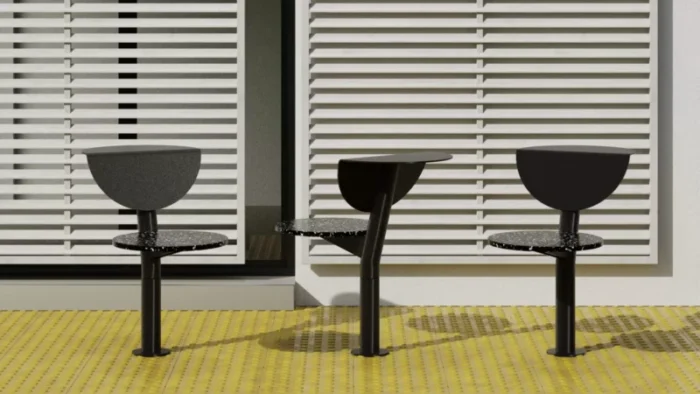
Plastic Guys is a startup, founded by two architecture students, transforms plastic waste into design boards for furniture and interior design. Their process involves collecting discarded materials, such as old keyboards and repurposing them into aesthetically pleasing and functional products. This initiative also offers innovative solutions for architects and designers seeking sustainable materials. The studio’s primary focus is on producing recycled plastic panels suitable for various applications, including interior and exterior design, furniture, and
decorative elements. Each panel is crafted from a single type of plastic, ensuring 100% recyclability and extending the material’s lifespan indefinitely. Plastic Guys source their raw materials from local manufacturers in Brno and across Moravia, primarily utilizing industrial plastic production rejects such as defective keyboards, mice, monitors, refrigerators, televisions, and food containers. By meticulously sorting plastics by type and color, they achieve true circularity, allowing their panels to be recycled repeatedly without degradation of quality.
Background and origin
Plastic Guys was founded by Ondřej Venclík and Marco Aulis, who met while studying architecture at the Brno University of Technology. Their journey began with an experimental project called Plastic Crystal, a shelter featuring a facade made from recycled plastic. This project sparked their interest in the potential of up-cycling plastic waste, leading them to establish Plastic Guys. Their work addresses the pressing issue of plastic waste by providing a sustainable solution that combines environmental responsibility with innovative design. The founders’ goal was to prove that plastic waste can be transformed into durable, useful, and even beautiful design elements. With a strong belief in circular economy principles, they focused on creating panels made from 100% recycled plastics — without additives, glues, or dyes — ensuring full recyclability even after repeated use.
Relevance to the craft sector
Plastic Guys’ approach is highly relevant to the craft sector as it exemplifies the fusion of traditional craftsmanship with modern sustainability practices. By transforming discarded plastic into high-quality, aesthetically pleasing panels, they demonstrate how waste materials can be repurposed into valuable resources for artisans and designers. This aligns with the principles of the craft sector, which often emphasizes material knowledge, skillful manipulation, and the creation of unique, handcrafted products.
Their work encourages craftspeople to explore alternative materials, pushing the boundaries of traditional craft practices. By providing a sustainable material option, Plastic Guys enable artisans to incorporate environmental considerations into their work without compromising on quality or design integrity. This not only broadens the scope of materials available to the craft sector but also promotes innovation and adaptability among practitioners.
Material focus – type of waste material involved
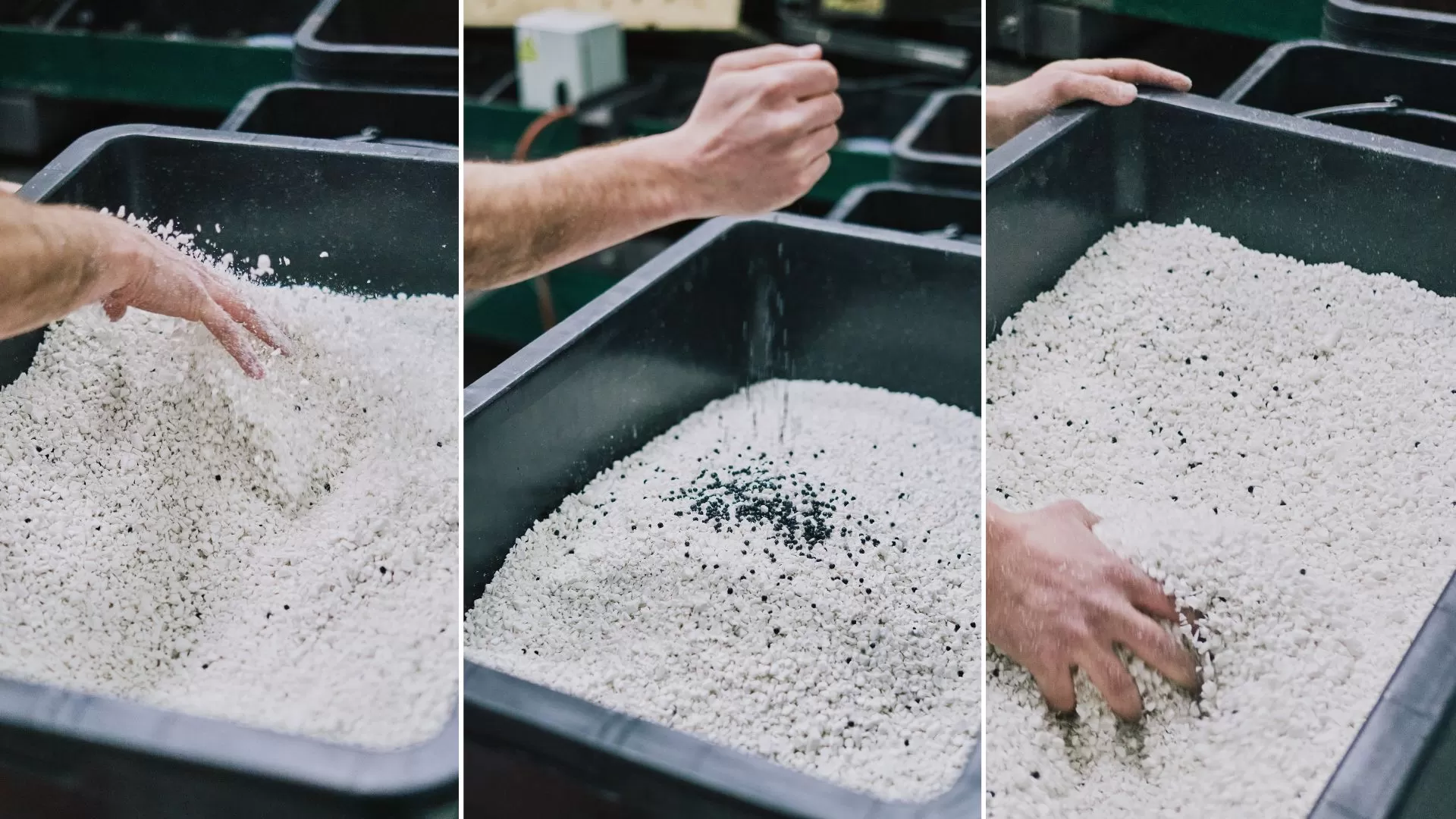
Plastic Guys specialize in upcycling plastic waste, focusing on thermoplastics. They are able to work with any types of thermoplastics, however the most used groups are:
- PP (Polypropylene),
- PS (Polystyrene),
- LDPE (Low-Density Polyethylene),
- HDPE (High-Density Polyethylene),
- PET-G (Polyethylene Terephthalate Glycol-modified),
- PLA (Polylactic Acid). The process involves sorting plastics by type and color.
Target groups
- Architects, interior designers, and furniture manufacturers who are seeking sustainable, designoriented materials
- Large-scale furniture companies that incorporate recycled plastic panels into their product lines
- Municipalities, schools, and public institutions, which use the panels for practical applications like benches in parks, school interiors, and urban furniture.
Stakeholders involved
- Recycling centres and companies supply plastic waste.
- Architects and designers who incorporate their recycled panels into their own
projects.
The nature of their involvement ranges from providing raw materials to supporting and promoting sustainable design practices.
Professionals involved and their roles
- Architects
- Other professionals such as marketing specialists and sales representatives
They have attended a number of workshops, seminars and events where they got valuable input from experts on their target market, manufacturing and price setting.
Connection of the practice with the project-identified needs
Knowledge of Waste Materials
Plastic Guys demonstrate a deep understanding of plastic properties and handling techniques. Their process involves meticulous sorting and crushing of plastics to achieve the desired texture and appearance in the final product. By using singletype plastics for each panel, they ensure that the materials remain recyclable, showcasing expertise in managing and repurposing plastic waste effectively.
Green Entrepreneurial Skills
The company transforms plastic waste into valuable products. Their panels have been utilized in various settings, including interiors of cafes, offices, and public spaces, indicating a strong market demand. By focusing on sustainability and design, Plastic Guys navigate regulatory requirements for recycled materials and tap into the growing market for eco-friendly construction and design solutions.

Creativity and Innovative Solutions
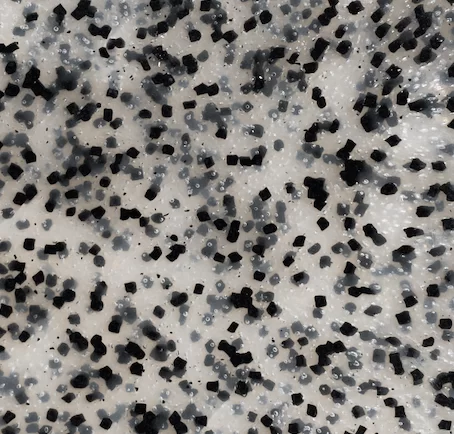
Plastic Guys integrate creativity into their upcycling process by producing panels with unique textures, aesthetics and designs. These panels are used in diverse applications, from furniture to architectural elements, demonstrating innovative use of recycled materials.
Methodological approach to implement the practice
Process description – step by step instructions for implementing the practice
The implementation process involves several steps:
1. Collection of waste materials.
2. Sorting plastics by type and color
3. Crushing and shredding the sorted plastics to the desired size.
4. Melting the crushed plastic into molds and heating it until it melts uniformly.
5. Pressing the molten plastic to form solid panels as it cools.
6. And doing it again because the panels can be recycled and other used plastics.
The time required to implement this practice varies depending on the scale of production and the availability of resources. Plastic Guys initially sought information and inspiration from their architectural studies and gradually developed their unique process through experimentation and collaboration.
Related Resources that have been developed
- Product Catalogs: Showcasing the variety of panels and products available for different applications.
- Sampler: potential customers can order a sampler to test what the products look like and how to work with it.
End product
The primary products are high-quality, aesthetically unique panels made entirely from recycled plastics. These panels are utilized in various applications, including:
furniture, interior design or architectural features. The panels can shine through and bend again to different radii.
Currently, Plastic Guys offer a basic size 1000x1000mm plastic panels in 3 widths,10,15 or 20 mm or extended size of panels in 1000x1500mm size and 2 with options of 10 and 20 mm. The panels come in 12 different colours, varying from light to translucent to dark tones. You can always, however, ask for a customised design.
The material is waterproof and highly resistant to a wide range of chemicals. It can be easily processed using woodworking tools, such as drills, saws (CNC, manual
saws, milling cutters), and water jet machines. The panels can be sanded and polished to achieve various finishes, from matte to high gloss, with PS and PET being more easily polished than other materials. Additionally, the panels can be thermoformed into various shapes, allowing for unique bends and designs. They can be securely joined using screws, glue, or specialized fixings.
Each panel is a unique piece, crafted from recycled materials, ensuring that no two are exactly alike. This individuality adds character and authenticity to every design, making each product a one-of-a-kind creation.
Sources of funding for this intervention
The company started as a start-up, which likely means it went through mentoring or guidance from selected experts in business development. It is also possible that it received financial support from investors.
Innovation, novel methods or technologies used
Plastic Guys’ innovation lies in their ability to process and upcycle large plastic waste materials, such as those sourced from refrigerators, 3D printers, and other industrial or household plastic products. By recycling these plastics, they give them a new life, transforming them into high-quality, durable panels that are suitable for a variety of uses, including in architecture, interior design, and furniture manufacturing.
Their process allows them to address both sustainability and functionality in a unique way, making the use of recycled plastics not only environmentally friendly but also practical for the design and construction industries. The company stands out by focusing on innovative materials and processes, providing sustainable
solutions to clients who value eco-conscious alternatives without compromising on performance or aesthetics.
Obstacles and challenges faced
Plastic Guys encountered several challenges during their journey:
- Technical limitations: Initially, they used old pizza ovens to melt plastics, which posed limitations in controlling temperature and achieving consistent quality. Upgrading to industrial presses improved their production quality.
- Material sourcing: Ensuring a consistent supply of sorted plastic waste required establishing reliable collection networks and educating suppliers on the importance of proper sorting.
Market perception: Overcoming the stigma associated with recycled products involved demonstrating that upcycled materials could meet high aesthetic and functional standards.
Steps further and plans for the future
Plastic Guys aim to expand their operations by processing 100 tons of plastic waste, turning it into valuable products. They also plan to enter international markets, bringing their sustainable design solutions to a global audience. Their products have been utilized in various projects across Europe, including installations in Germany, Austria, Hungary, Italy, Belgium and Slovakia. These collaborations highlight the company’s growing influence in promoting sustainable design solutions internationally.
Key impacts – environmental, economic & social
Environmentally, by reusing plastic waste they reduce landfill contributions and promote a circular economy. Each panel produced avoids approximately 60.29 kg
of CO₂ emissions.
For environmentally conscious clients — including large companies, municipalities, and eco-minded individuals — Plastic Guys provide data not only on the kilograms of plastic saved from landfills or incineration but also the carbon footprint of their panel products. This allows clients to clearly quantify their environmental impact. The carbon footprint calculations are available upon request and can be integrated into sustainability reports or CSR presentations.
Economically, they create economic value from waste materials and support local economies by sourcing plastics from local suppliers. Socially, their success inspires other young entrepreneurs and raises awareness about the potential of upcycling and sustainable design.
Qualities and criteria’s to consider the practice effective,
efficient, sustainable, transferable
Overview
Effectiveness: How well does the practice achieve its goals?
Efficiency: Does the practice minimize resources while maximizing outputs?
Sustainability: Does the pratcice
contribute to environmental protection, social equality and long- term viability?
Transferability: Are the methods transferable in different contexts?
Required Competences for the best practice
implementation
Activities-to-competences mapping
Associated competences
Knowledge
Skills
Attitudes
Training needs required for successful implementation
- Training in plastic sorting and recycling techniques.
- Education on environmental regulations and sustainability practices.
- Business and entrepreneurial training for market analysis and business
development.
Lessons learned
- Plastic Guys demonstrate that plastic waste, including industrial scraps and post-consumer plastics, can be successfully repurposed into high-value, functional, and
aesthetic products. What is typically seen as trash can become a raw material for design. - Their practice of providing data on plastic saved and even offering carbon footprint calculations of their panels on request builds credibility and shows commitment to
environmental accountability. - A key lesson is that sustainability does not have to come at the cost of style. By merging aesthetics with recycling, they’ve shown that recycled materials can meet high design standards.
- Starting as a local startup, Plastic Guys have grown to export their products abroad, proving that innovative circular
economy models are scalable and can thrive internationally.