
KAYU
Overview

SCROLL DOWN FOR MORE!
Country
Type of organization
Number of employees
Type of practice
Level of investment
Activity type
Key words

Summary

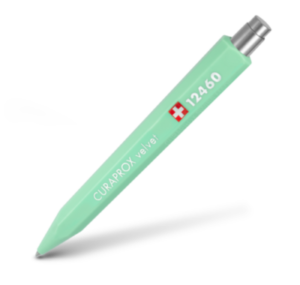
The Kayu Cura is a premium ballpoint pen crafted from upcycled Curaprox toothbrushes, exemplifying sustainable design without compromising on quality or aesthetics. Each pen is meticulously assembled by hand, ensuring a unique and high-quality writing instrument. Equipped with a German-engineered, silent click mechanism, the Kayu Cura offers a smooth and quiet operation. It features the high-capacity Schmidt Easy Flow 9000 refill, delivering an exceptionally fluid writing experience. The pen’s body retains the vibrant colors of the original toothbrushes. This not only adds a playful aesthetic but also serves as a nod to its upcycled origins.
Background and origin
Kayu Writing was founded in 2020 in the Czech Republic by designer Michal Klaška and his team, with the vision of creating pens that merge craftsmanship, design, and sustainability. The brand name “Kayu” is derived from the Indonesian word for “wood,” reflecting their initial inspiration to produce high-quality writing instruments with a personal and natural touch. Although most of their pens are made from durable, modular components designed to last a lifetime, the idea of upcycling emerged later as the brand grew increasingly focused on environmental responsibility. The Kaya Cura pen—a collaboration with Swiss toothbrush brand Curaprox—was born out of this commitment to sustainability. In 2020, during the COVID-19 pandemic and amidst growing global instability, including the war in Ukraine, Kayu was challenged to think more critically about waste, local production, and the resilience of their business model. The pandemic not only affected logistics and sales, but also deepened the founders’ resolve to create products that carry both emotional and ecological value.
Relevance to the craft sector
The Kaya Cura pen demonstrates how traditional craftsmanship can intersect with modern sustainability efforts. The meticulous manual assembly and attention to detail reflect high-quality craftsmanship. By repurposing plastic materials, the project aligns with the craft sector’s values of resourcefulness and innovation. It serves as a model for artisans seeking to incorporate upcycling into their work, showcasing the potential for creating functional art from discarded materials.
Material focus – type of waste material involved
The Curaprox handle is made of polypropylene (PP) – a type of plastic that is lightweight, durable, and commonly recyclable. For their other classic pens, they also use more sustainable materials such as stainless steel, brass, and bronze.
Target groups
- Environmentally conscious consumers who value sustainable products.
- Design enthusiasts appreciating innovative craftsmanship.
- Professionals seeking unique, highquality writing instruments.
Stakeholders involved
- Curaprox: Supplies defective toothbrushes for upcycling.
- Kayu Writing: Designs and manufactures the pens.
- Consumers: Support the initiative by purchasing the sustainable product.
They also collaborate with local artisans to produce pen accessories, such as pen cases made in Tišnov.
Professionals involved and their roles
- Designers: Conceptualize and design the pen.
- Technicians: Perform CNC milling and manual assembly.
- Marketers: Promote the product to target audiences.
Connection of the practice with the project-identified needs
Knowledge of Waste Materials
The project requires an understanding of plastic properties to effectively transform toothbrushes into pens. Handling techniques are crucial to ensure safety and quality during the upcycling process.
Green Entrepreneurial Skills
The initiative taps into market potential by offering a unique, eco-friendly product. Knowledge of regulatory compliance ensures the product meets safety and environmental standards. The business model demonstrates scalability, with potential expansion into other upcycled products. The toothbrush pen line is a supplementary product range in the company’s portfolio, not its main product, which provides the company with stability.
Creativity and Innovative Solutions
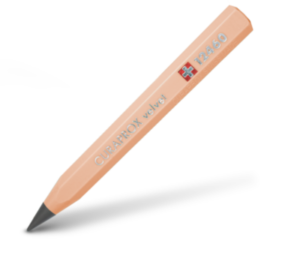
The pen showcases an innovative application by repurposing toothbrushes into writing instruments. Its aesthetic design appeals to consumers, integrating sustainability with style. Kaya Cura is the world’s first pen made from a toothbrush.
Methodological approach to implement the practice
Process description – step by step instructions for implementing the practice
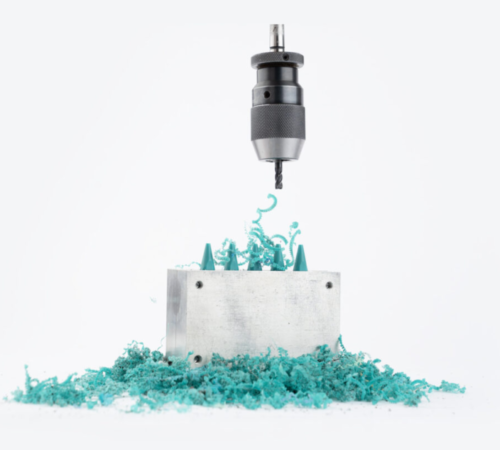
The Kaya Cura pen is made by upcycling toothbrush handles, specifically from Curaprox toothbrushes. First, the used handles are collected and thoroughly cleaned. Then, using precise CNC machining, the handle is reshaped into the body of a pen. This gives it a smooth, ergonomic finish while preserving its original highquality plastic. Next, the pen is assembled with locally sourced components: a nickel-plated steel
clip and a small metal spring, both made in the Czech Republic. It’s then fitted with a premium large-capacity ink refill and a smooth-click mechanism, both imported from Germany. The process was developed with the help of CNC experts and sustainability consultants. From idea to final product, development took several months of prototyping and refining. The result is a sustainable pen with a unique story and high-quality performance.
Related Resources that have been developed
Resources include CNC milling machines, assembly tools, and packaging materials made from recycled paper and sheep wool felt.
End product
The Kaya Cura pen is an upcycled writing instrument created from discarded Curaprox toothbrushes. Each pen is unique in appearance, carrying the color and form characteristics of the original toothbrush handle, making every piece one-ofa-kind. The pens are carefully machined using precise CNC technology, giving them an ergonomic shape and high-quality feel.
There are three main product lines in the Kaya Cura series:
1. Kaya Cura Premium – the flagship model, crafted with high precision and detail. It includes a nickel-plated steel clip, a Czech-made spring, and a German-made premium ink cartridge for smooth, reliable writing. The pen features a click mechanism with an exceptionally fluid motion, making it both a sustainable and luxurious everyday object.
2. Kaya Cura Lite – a lighter, more accessible version of the pen, offering the same sustainable body made from toothbrushes but with simplified components.
3. Kaya Cura Graf – this version features a matte finish and minimalist aesthetics, designed with creatives and designers in mind. It emphasizes clean lines, balance, and a softer feel in the hand. Innovation,
Innovation, novel methods or technologies used
The innovation lies in the upcycling of defective toothbrushes—normally destined for incineration or landfill—into aesthetically refined and functional writing instruments. Rather than melting and remolding plastic (as in traditional recycling), the toothbrush bodies retain their structure, preserving energy and material integrity. The project integrates precise CNC milling, manual craftsmanship, and sustainable packaging, setting it apart from mass-produced plastic pens and conventional recycling models. Kayu is the first ever company that collaborates directly with Curaprox CZ on sustainable use of their leftover toothbrushes. From March 2024, Kayu works with Marie Glaserová, the country manager of Curaprox for the Czech Republic, on a pilot product launch in Czechia, making it the first country in the world where Kayu Cura pens will go on sale. One of the innovative features of Kaya Cura pens is their modular design, which supports long-term use and sustainability. Each component of the pen—such as the clip, spring, ink cartridge, and mechanism—can be easily disassembled, replaced, or upgraded without needing to discard the entire pen.
Obstacles and challenges faced
- Designing a pen that worked with the curved, ergonomically shaped toothbrush handle.
- Maintaining consistent quality during manual assembly.
- Sourcing a large enough quantity of defective brushes that met hygiene and safety standards.
Steps further and plans for the future
The team is exploring the potential for creating sustainable alternatives in various areas, including toys, gardening tools, and household cleaning products. However, given the numerous opportunities they’re already working on, they currently focus on jotting down ideas in their diaries with the hope that the right time to pursue them will come. One ambitious vision they have is to develop a drinking water solution for households, and potentially even for entire communities, that operates without the need for an external energy supply. The team remains hopeful that this groundbreaking concept will eventually come to fruition.
Key impacts – environmental, economic & social
- Environmental: Reusing plastics that would usually end up in a landfill, reduces need for virgin plastic.
- Economic: Adds value to waste products, generates revenue through niche design market.
- Social: Raises awareness about conscious consumption and design, inspires other upcyclers and small creative businesses.
Their main objective is a not-for-profit. It’s not a non-profit, but it means that a company deliberately focuses on generating profit, which is reinvested into its own growth. The main distinction is that all remaining profits are not absorbed by the owners, shareholders, or investors. Instead, the money is returned to the ecosystem through support for activities, associations, or foundations, which then transform the funds into regenerative social and economic value. They strongly believe that if we aim to change the current economic and environmental trajectory, this is a promising path to make a real difference. The journey ahead will
be challenging, and Kayu knows that reaching this vision will take time, but after all, what would business be without a clear vision? They hope for success and appreciate all the support.
Qualities and criteria’s to consider the practice effective,
efficient, sustainable, transferable
Overview
Effectiveness: How well does the practice achieve its goals?
Efficiency: Does the practice minimize resources while maximizing outputs?
Sustainability: Does the pratcice
contribute to environmental protection, social equality and long- term viability?
Transferability: Are the methods transferable in different contexts?
Required Competences for the best practice
implementation
Activities-to-competences mapping
Associated competences
Knowledge
Skills
Attitudes
Training needs required for successful implementation
- Technical training: CNC operation, assembly techniques.
- Sustainability education: CE principles, upcycling methods.
- Entrepreneurship: Market positioning, storytelling, branding.
- Product safety/regulations: Especially for upcycled consumer goods.
Lessons learned
- Waste is a resource—creativity can turn trash into treasure.
- Collaboration between brands and designers can lead to innovative solutions.
- Small-scale practices can have large-scale awareness and impact.
- Manual craftsmanship and tech (CNC, marketing tools) can co-exist to create meaningful, beautiful, and marketable products.
References / links:
- www.kayuwriting.com
- https://www.designmag.cz/produkty/119346-ceska-znacka-kayu-vyrabi-kulickova-pera-cura-z-vyrazenych-zubnich-kartacku-curaprox.html
- https://www.idnes.cz/brno/zpravy/zubni-kartacek-vada-byznys-premena-pero-klaska-kayu.A240715_103026_brno-zpravy_mos1
- https://www.youtube.com/watch?v=n8y5aFDchM8&t=1s